Every week, Model Hustle checks dozens of castings, open calls and runway registrations for the opportunity board. The same patterns come up again and again: calls that look identical on the surface can be a well-paid job, a fair portfolio opportunity, or an expensive waste of a day. The difference is almost always in the details. This is how to read any casting call, line by line, before you spend time and money on it.
Who is behind it?
Start with the organizer. A casting from a named brand, production company, agency or fashion week, published on that organizer’s own website or registration page, is a very different thing from an anonymous post on a social feed. If the call does not name an organizer, find out who it is before going further. If it does, check that the same call appears on their official site with the same dates and terms. Copies with changed contact details are a common scam.
Is it a casting, a submission or an event?
A casting is for a specific job: a campaign, a film, a show. If you are chosen, you are booked.
An agency open call or submission is an invitation to be considered for representation. Being seen is not being signed, and being signed is not being booked.
A runway registration for a fashion week is often a first step: you register, attend a model casting, and only then may be selected for individual shows.
A background or extras call in film and television is paid work, usually at a set daily rate, with long hours and little creative input.
Knowing which one you are looking at sets the right expectations for everything else.
Pay: what is actually stated
Look for a number and a unit: per hour, per day, per look, flat fee. “Paid” with no amount, “competitive rates” and “depending on budget” all mean you will have to ask, and you should, before travelling. Trade for images, “exposure” and “a great portfolio opportunity” are not pay. Some of those opportunities are still worth doing; just decide on that basis, not because the word “paid” appeared somewhere in the post. When the pay varies by role, ask which role you are being considered for and what it pays.
Fees and ticket sales
Read the small print for any money flowing from you to the organizer: registration fees, participation fees, a required “model package”, or a requirement to sell a number of tickets to the show. Some independent fashion events fund themselves this way and say so openly; many others hide it until you are committed. A ticket-sale requirement turns you into the event’s sales force, unpaid. If a call involves any payment from you, you should be able to find it stated plainly before you apply.
Eligibility
Check age range, height or size requirements, location (“local hire only” means travel and accommodation are your problem), work authorisation, and any union status for film and TV. Applying for calls you clearly do not fit rarely works and can annoy casting teams who remember names.
Usage, and AI
Most open calls say nothing about how the resulting images or footage will be used. That is not unusual at the application stage, but you should get the answer before you sign anything. Ask where the content will run, for how long, and whether it may be used to train AI or create a digital replica. Our guide to image usage rights explains what a fair answer looks like.
Dates, deadlines and the form itself
Note the application deadline, the casting date, and the job or show dates, and check they agree with each other. Registration forms sometimes carry older dates than the announcement; when they conflict, confirm with the organizer before booking travel. Look at what the form asks for. Digitals, measurements and a contact number are normal. A passport scan, bank details or payment information at the application stage are not.
A quick checklist
Named organizer, call confirmed on their own site.
Clear about whether it is a booking, a submission or an event.
Pay stated as an amount, or you know to ask.
No fees or ticket sales, or they are stated openly and you accept them.
You meet the eligibility requirements, including location.
Dates are consistent and you know the deadline.
You know, or will ask, how the content will be used.
How the opportunity board labels calls
Each listing on the Model Hustle board is marked Official source, Verified third party or Verify before acting, and carries plain-language notes for anything you should check: undisclosed pay, undisclosed usage, ticket-sale requirements, conflicting dates. The rules behind those labels are in our editorial policy. Use them as a starting point, and always confirm the final terms with the organizer yourself.
For a freelance model, the clients in your own city are a ceiling. Travel lifts it. A few days in a larger market, or a run through several cities, can put you in front of photographers, brands and agencies you would never reach from home. It also costs money before it earns any, and a badly planned trip can lose more than it makes. This is how working models plan travel that pays for itself.
Two kinds of travel
Booked travel is when a client hires you for a job somewhere else. The client should cover your travel and accommodation, or the quote should include them. A tour is when you decide to work in another city for a period and fill it with bookings yourself. The first is simple once you know how to quote it. The second needs planning, because you are carrying the cost.
Quoting a booked out-of-town job
Travel: flights or mileage, and transfers. Say whether you will book and invoice, or the client books for you.
Accommodation: the nights you need, including the night before an early call.
Travel days: a day spent travelling is a day you cannot work elsewhere. Many models charge a travel-day rate, often half their day rate.
Per diem: a daily allowance for meals, or an agreement that the client covers them.
Cancellation: what happens if the client cancels after you have booked non-refundable travel. A deposit, or a clause covering non-refundable costs, protects you.
Itemise these separately from your session fee and usage, just as you would at home. Our guide to setting your rates covers how to build the rest of the quote.
Planning a tour
1. Do the arithmetic first
Add up travel, accommodation, local transport and food for the whole trip. Divide by your typical booking fee. That is the number of bookings you need just to break even. If you cannot see a realistic way to fill that many slots, shorten the trip or choose a closer city.
2. Announce early
Give photographers and clients in the destination three to six weeks’ notice. Tell them the dates, the kind of work you are available for, your rates and how to book. Photographers who shoot often will plan sessions around a visiting model; clients need time to approve budgets. On ModelDesk, the tours board lets you announce a tour publicly and take deposits for sessions in advance, so that confirmed bookings, not hopes, justify the trip.
3. Take deposits
A booking without a deposit is a maybe. Ask for a deposit, typically a portion of the fee, to confirm each slot on a tour, with clear terms on what happens if either side cancels. Deposits protect your travel costs and filter out people who were never going to show up.
4. Build the schedule sensibly
Leave time between shoots for travel across the city, hair and make-up changes and rest. Two good sessions a day are better than four rushed ones. Keep one day free for go-sees, agency visits or the inevitable reschedule.
Agencies and travel
If you are represented, talk to your agency before planning a tour; your contract may require that bookings in other markets go through them or a partner agency. Agencies sometimes arrange placements in other cities for a season, advancing travel and accommodation costs that are later deducted from your earnings. Read exactly which costs can be deducted before you accept.
Staying safe in a city you do not know
Check every new client before you travel: website, previous work, other models who have worked with them.
Share your schedule, with addresses and contact names, with someone at home, and check in after each shoot.
Stay somewhere you chose yourself, not in accommodation provided by a client you have not worked with.
Keep money aside for a last-minute ticket home.
Agree every shoot’s content, wardrobe and usage in writing before you go, so nothing is negotiated under pressure far from home. The warning signs in our guide to modeling scams apply double when you are away.
Make the most of the trip
Check the destination’s castings and open calls before you go: the weekly opportunity board lists verified calls by city. Bring printed comp cards. Update your profile’s location or travel setting so clients searching that city can find you while you are there, and change it back when you leave.
An agency can transform a modeling career: it negotiates rates and usage you might not know to ask for, puts you in front of clients you could not reach alone, and handles invoicing and chasing payment. A bad agency, or a fake one, can cost you money and years. This guide explains what agencies do, how to tell a real one from a costly imitation, and how to approach one professionally.
What an agency actually does
A modeling agency represents you to clients. It submits you for castings, negotiates the fee and usage on each booking, issues invoices, collects payment and pays you your share. In return it takes a commission, usually a percentage of your fees, and often charges the client a separate service fee on top. A good agency also guides your development: which tests to shoot, which jobs to turn down, which markets to visit. It earns money when you work. That is the most important thing to understand about how agencies make money.
Different kinds of agency
Mother agency: the agency that discovers or first signs you and manages your career overall, often placing you with other agencies in other cities and taking a share of what you earn there.
Model management in a major market: agencies in fashion capitals that book runway, editorial and high-end commercial work, frequently through placements from mother agencies.
Commercial and talent agencies: agencies that book advertising, catalogue, lifestyle and on-camera work, sometimes alongside acting.
Specialist agencies: divisions or boutiques focused on fitness, curve, mature, parts, influencer or other specific markets.
Approach agencies that book the kind of work you are suited for, in a market you can realistically work in.
How to check an agency before you sign
Look at their board. A real agency shows the models it represents. Are they working? Search for recent campaigns, editorials or shows credited to models on the board.
Look for a licence where it is required. In some places, such as California and New York, agencies that procure employment for talent must be licensed. Your state or local government will usually let you look up a licence.
Find a physical presence. A real office address, named staff and a working company phone line.
Ask models. Contact one or two models on the board and ask how they find working with the agency.
Follow the money. Ask what you would pay, ever, apart from commission on bookings. Upfront registration or portfolio fees payable to the agency are the clearest warning sign. Our guide to spotting modeling scams lists the others.
Reading the contract
Agency contracts vary widely, so read every line and ask about anything unclear before signing. Pay particular attention to the length of the term and how it renews, whether representation is exclusive and in which territories, the commission rate and what it applies to, which expenses the agency can advance and later deduct from your earnings (test shoots, comp cards, website fees, travel), how and when you are paid after the client pays, and how either side can end the agreement. You are entitled to take a contract away and have it reviewed. An agency that will not allow that is telling you something.
How to submit
Read the agency’s submission page and follow it exactly. Many accept submissions only through a form, and only for certain divisions.
Send clean, recent digitals, not a styled portfolio. Agencies want to see you, not the team behind a shoot.
Include your height, measurements, age, location and any relevant experience in a short message.
If they hold an open call, go: it is a chance to be seen in person. Bring digitals and a comp card if you have one.
Do not chase repeatedly. If an agency is interested, they will contact you; if they are not, try others and resubmit with new digitals after a few months.
Working without an agency
Plenty of models work successfully as freelancers, particularly in commercial, lifestyle, UGC and regional markets. Freelancing means you handle your own rates, contracts, usage and invoicing, which is exactly what Model Hustle’s tools are built for. Many models do both: freelance in their home market while represented elsewhere. Whatever you choose, current agency open calls and submission windows that we have checked are listed each week on the opportunity board, and agencies can find verified talent through Model Hustle for Agencies.
A model can stay busy for years without building anything. Most of the time it isn’t for lack of beauty or effort. It’s because she never understood what the business is built on.
For more than twenty years, I’ve photographed and published a lot of women who called themselves models. If I’m honest, most of them weren’t building a modeling career.
Some were in it to get published. Others were chasing a goal they’d watched someone else reach for, a magazine credit, a certain kind of attention, a certain circle, on the assumption it would put them in front of the right people and eventually lead to money.
I don’t need to name anyone to describe what usually happened next, because it happens all the time. She shoots for a year and a half. Fashion first, then implied, then nudes. She meets photographers, builds a following, and collects a hard drive full of images. Then she burns out, because none of it went anywhere. She never figured out the strategy that would get her in front of the people who could actually move her career.
Everyone in that cycle looks active. Very few stop to ask what the activity is producing.
This isn’t about morality. I’m not here to tell anyone what kind of work is right or wrong. I’m talking about dedication, and about the women who want to call themselves models but get stuck taking pictures that lead nowhere.
What modeling is actually built on
Most of the women I’m describing came in with a master plan. They knew how they wanted to brand themselves, how they wanted to be seen, how they wanted to be respected from behind the camera, and whose approval and cheers they wanted.
What many of them never understood is what the game is built on.
Modeling isn’t built on respect. It isn’t built on approval. It’s built on allure.
There are levels to modeling, and allure runs through all of them.
Product modeling is when you’re selling something else: clothing, jewelry, a car, a drink. The product is the point of the image, but allure is what makes someone stop and look at it. Your job is to make the product more desirable by being next to it.
Charm modeling is when you’re the product. There’s nothing else in the frame to sell. Your presence, your charm, and your ability to hold attention are what the client is paying for, and what the audience is buying.
Most of the women I’m describing are working at the charm level, whether they realize it or not. The models who get somewhere understand that. They treat modeling as a way to sell themselves, and as a way to reach a bigger platform than the one they started on. The ones who get stuck are often still waiting for the camera to deliver respect, as if respect were the job instead of the result of doing the job well.
(I’ve written about this from the glamour side, where the requirement is desire. The same principle runs through every genre.)
The OnlyFans shift
In the last few years, OnlyFans changed the end goal for a lot of these women.
Even someone who’d never thought about modeling could find a photographer willing to shoot her. If the pictures were finished and looked good enough, she could post them and make money. Posing ability and modeling skill weren’t required. The smart ones eventually figured out they didn’t need a photographer at all, or need to be a model, to get paid there.
That’s fine. It’s a hustle, and it’s hers to choose. It isn’t different in kind from deciding to dance at a club. Some women feel they’re above that, so they call it modeling. (I’ve looked at how strip-club economics are reshaping the traveling-model circuit before.)
But it’s a different business with a different goal: money with minimal effort. If that’s the goal, be clear about it, because it calls for different decisions. This article is about the women who want to be models and keep shooting without a plan, until either they quit or they take the OnlyFans route by default.
Copying what looks successful
A lot of stuck models are running someone else’s plan.
I call it “monkey see, monkey do.” A model finds someone who looks successful and starts repeating what she sees: the poses, the styling, the photographers, the events, the way she presents herself online.
Learning from other people is useful. The danger is assuming visibility proves someone has a working business. The woman being copied may still be figuring it out herself. Her photographs tell you almost nothing about her expenses, her paid bookings, her repeat clients, or the opportunities she chased and lost. A busy page isn’t a career, and a follower count isn’t an audience.
When a whole group copies the same surface, they end up repeating the same unproductive choices together.
If you’re going to study another model, study the decisions, not the photos. What skills has she developed? How does she present herself to clients? What relationships has she built? Which of those would actually serve your goal? Her page isn’t your shot list.
“I want to be a model” isn’t a goal
It’s an ambition. To guide decisions, it needs a destination.
A real goal sounds like: preparing submissions for the right agencies, building a portfolio for a specific type of client, developing a base of paying freelance customers, or earning a defined amount from bookings. Each one tells you which opportunities to take and which to pass on.
When the goal stays vague, almost anything feels like progress. A free shoot, a fashion show, a publication credit, another collaboration. The calendar fills up, and the question of where the career is going never gets answered. Getting published can be part of a strategy, but a cover isn’t a career by itself.
Some people model as a creative outlet, and that’s a perfectly good reason. The frustration I’m describing comes from wanting a paying career without ever connecting the creative work to a way of earning.
Every shoot needs a reason to exist
I’ve watched models spend a year or more taking whatever shoots come along while avoiding a deliberate investment in the work they actually need. At the end, they have plenty of photographs and still lack the images that would support where they want to go.
A portfolio should help someone understand your ability and imagine booking you. Every session should have a reason: stronger expressions, better movement, a missing type of image, experience in a particular style, or material for a specific submission. Once you know the reason, you can choose the photographer, styling, and location that serve it.
That sometimes means spending money. Being professional includes budgeting for your own development when there’s a clear need and a credible person who can meet it. A model who won’t invest in the work her goal requires shouldn’t be surprised when casual collaborations never produce it.
The amount isn’t the point, though. An expensive shoot can serve the wrong goal. Before you pay anyone, know what you need, what you’ll receive, and why that person is the right one to provide it. Any offer built on a promise of guaranteed bookings deserves hard scrutiny.
The same thinking applies to shooting for free. TFP can give you practice, stronger images, a useful relationship, or a creative experience worth having. After a long stretch of it, review the results. Have the images improved? Can you show skills you couldn’t before? Are you reaching the right clients? Are you easier to find, evaluate, or book? If the answers are unclear, more of the same won’t clear them up.
Five questions before your next shoot
What kind of modeling work am I pursuing?
Who could realistically hire me for it?
What do those people need to see to believe I can do it?
What specific gap will this shoot close?
What will I do with the images afterward?
The last one matters most. Images need a use: a submission, a portfolio refresh, a new service, or a conversation with a potential client. Decide the use before the session, and the session has a much better chance of being worth it.
At some point, outside feedback becomes necessary too. You may feel your portfolio is ready while the people who know your target market see the gaps. Being willing to hear that, and to judge whether the person saying it knows what they’re talking about, can save you another year of the same decisions.
Give it a direction
None of this guarantees an outcome. Money, location, access, responsibilities at home, and discrimination all shape who gets opportunities, and rejection alone doesn’t prove someone lacked a plan.
But a plan gives you a way to read what’s happening, adjust, and decide where your effort belongs. Beauty and enthusiasm deserve that much. After twenty years of watching women enter this field, I’d like to see more of them give those qualities a real chance to become something that lasts.
Before another year goes by, take an honest look at what your work is building. Define the goal. Learn who hires for it. Understand that what they’re buying is allure. Then make the next shoot part of the plan.
Related: The Standard in Front of the Lens, on portfolio judgment from the photographer’s side, and After the Spotlight, on what a model builds while the attention lasts.
The strange economy of independent publishing, where contributors want the status of being published but may not believe in the product itself—and what that reveals about how a generation of talent understands publicity.
A few weeks ago a model I photographed landed the cover of an independent men’s magazine. It’s a real title, not a PDF that lives on a submission portal. It has its own website, a print and digital store, several years of back issues, recurring features, and a recognizable identity. I told her the cover was confirmed and that I was planning to order copies. Then I asked whether she wanted any for herself.
Her answer was some version of “What does that do for me?” She wasn’t going to see money from magazine sales, so she didn’t see the point of owning the magazine.
A few days later the digital tearsheets arrived. She wanted them immediately. She wanted them posted, tagged, captioned, and shared to her followers as fast as possible.
I’ve been sitting with that contrast because it isn’t really about her, and it isn’t really about that magazine. It’s about a way of thinking I see constantly in models, performers, and creators around this network: the cover is worth posting, but the magazine isn’t worth buying. The badge has value. The product doesn’t. I think that contradiction explains more about why talented people stall than almost anything else I’ve watched happen in this industry.
Her question was the right one
I want to be fair to her first, because her instinct wasn’t wrong. Every model and every photographer should ask what a publication actually does for them. The independent magazine world has trained people to stop asking.
There are hundreds of independent titles accepting work through submission platforms like Kavyar, and by that platform’s own count there are well over a thousand active calls for submissions at any given time. A publication can receive hundreds of submissions for a single issue. That looks like demand. It isn’t the same thing as readership. The platform is designed, by its own description, to help publishers attract contributors. Its “popular publishers” ranking isn’t a measure of how many people read a magazine; it’s based largely on how many new users a publication brings into the platform over a rolling window, and the platform itself says that ranking isn’t a judgment of prestige.
So a title can look extremely active inside a submission portal while having almost no consumer audience outside it. In the worst version of that arrangement, the economy runs backwards. Photographers create the images. Models supply their likenesses. Makeup artists and stylists contribute labor. The creative team may pay a submission fee. The publication receives finished editorial content it didn’t have to produce. The contributors then promote the issue, and the primary buyers turn out to be the contributors, their friends, their families, and their fans. The magazine is receiving more value from the people inside it than those people receive from the magazine.
There’s a second distinction worth understanding. The platform separates “contribution” options, where payment isn’t supposed to influence acceptance, from “advertising” options, where payment explicitly buys acceptance, promotion, a cover, or social posts, and it permits publishers to offer paid cover upgrades after a submission is accepted. None of that makes a paid cover ugly or useless. It does mean a paid cover should be understood as purchased advertising rather than an editorial honor. If a photographer paid a hundred dollars for a guaranteed cover on a title with no measurable audience, that cover isn’t evidence that a respected editorial organization selected the model over other candidates. It’s evidence that the team bought a design and distribution service. There may still be value in the object. The source of the value is different, and everyone involved should be honest about it.
Given all of that, “What does this do for me?” is exactly the question. The word published doesn’t create value by itself.
What a publication actually has to have
The mistake is treating “does it pay me?” as the only version of that question. A respected nonprofit arts journal might never be profitable and still carry enormous credibility. A magazine needs at least one meaningful kind of value behind it, and there are more kinds than people usually count.
There’s audience value: real readers, subscribers, traffic, followers, an email list, buyers. There’s credibility value: a respected name, a selective editorial process, recognizable contributors, an established reputation. There’s distribution value: newsstands, bookstores, subscriptions, events, libraries, dependable online discovery. There’s commercial value: advertisers, sponsors, sales, affiliate or paid contributor programs. There’s network value: access to editors, brands, event producers, and collaborators. There’s asset value: a professionally designed cover, a physical issue, an interview, tearsheets the subject can reuse. And there’s archival value: a durable record of a career that can be preserved, displayed, and collected.
If a publication has none of those, then “getting published” really is little more than vanity validation. If it has even one or two of them, the question changes from whether the publication is worth anything to whether the person on the cover knows what to do with it.
That’s where her situation stopped being about the magazine and started being about her.
The tearsheet is for display. The magazine is for use.
When I told her the tearsheets were available, she recognized an opportunity instantly. She understood that “published cover model” would produce validation, attention, comments, and likes. That’s not nothing. A tearsheet is a legitimate piece of branded collateral. It belongs on her website, in her press kit, in a booking deck, in an acting résumé, in outreach to promoters.
What she didn’t appear to recognize is that the tearsheet and the physical magazine serve different purposes. The tearsheet is immediately postable content. The physical issue is lasting collateral. The social post announces the accomplishment. The object lets the accomplishment keep working after the post has scrolled away.
She isn’t only a model. She sings, she acts, and she performs live. That matters, because a performer stands in front of a room full of attention on a regular basis, and most of that attention evaporates on the way to the parking lot unless there’s something for people to take home.
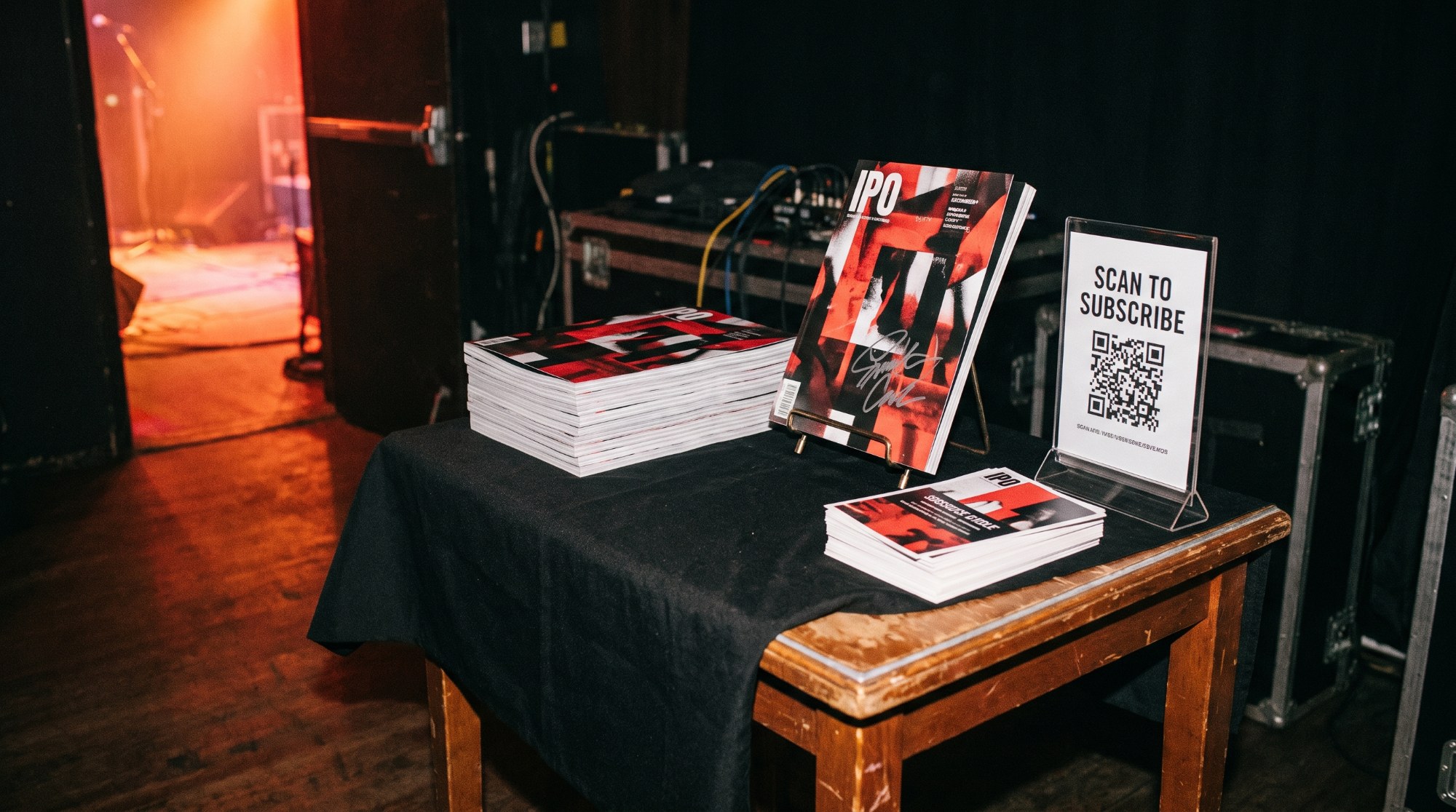
A magazine with her on the cover is exactly that kind of something. She could hold it in promotional portraits and interviews. She could bring it to performances and sign copies. She could offer signed issues as a premium fan item, include one in a VIP package, hand one to a promoter or venue owner or casting contact, display it on a merchandise table, run a giveaway that collects email addresses, film an unboxing and a cover reveal and a signing. The fan buying that copy doesn’t need to know or care about the magazine. The fan wants it because she’s on it and she signed it. Her presence gives the object a second layer of value the publisher never created. Once it’s personalized, it stops being an issue of a magazine and becomes memorabilia connected to her career.
Signed, displayed, and next to a way to follow her: the magazine stops being an issue and becomes memorabilia.
That doesn’t mean she should have bought a box of magazines on faith. Buying inventory without knowing the cost per copy, whether a contributor discount exists, whether your fans actually want signed copies, what you could reasonably charge, or how you’d display and sell them isn’t strategy. But one or two copies for promotion, interviews, press materials, and live appearances isn’t inventory. It’s a modest marketing investment for any performer building out her physical collateral. And because I was already ordering copies, whether she personally paid for one was never the real issue. The real issue was whether she could imagine any use for the physical object beyond helping the publisher make a sale.
Her answer suggested she couldn’t. She understood validation. She hadn’t yet understood conversion.
The post has become the destination
I don’t think she’s unusual. I think she’s typical, and that’s the problem.
A lot of emerging models understand perfectly well how to extract attention from an accomplishment. They post the cover, tag the publication, put “published model” in the caption or bio, and collect the congratulations. Then the strategy ends. There’s no link to book them. No upcoming dates. No updated press kit. No press page on a website. No email capture. No signed merchandise. No promotional cards at shows. No outreach to promoters or casting people who might care. No follow-up content telling the story behind the feature. No effort at all to turn a temporary spike of attention into a durable audience.
The post becomes the destination instead of the beginning. The likes arrive, the story expires, and the accomplishment produces nothing the model owns, sells, distributes, or uses to secure the next opportunity.
Notice what that reveals about how the magazine is being valued. In many cases the model isn’t particularly interested in the publication at all. She may not know who reads it. She may never read the other features. She may not know where it’s distributed or whether it has subscribers. She won’t follow it after her issue. She’ll promote only the pages containing her photographs. What she values is the visual evidence that she was published. The masthead, the cover lines, the barcode, the page design, and the word magazine transform a photograph into something that looks editorially validated, and she wants that validation displayed to her followers even if she doesn’t believe the complete product is worth owning.
Which leads to an uncomfortable question that I think every model and every photographer in this network should sit with: if the magazine isn’t worth buying, reading, or owning, why is appearing in it worth celebrating?
The answer isn’t always “it isn’t.” But you should be able to say what kind of value you actually received.
“If it isn’t Playboy or Maxim, does it count?”
Her reaction wasn’t really a judgment about that specific title. I’m confident she’d have said the same thing about almost any independent magazine, because the reaction comes from a hierarchy of legitimacy that a lot of models carry around without examining it.
A title like Playboy, Maxim, Vogue, or Sports Illustrated arrives with preexisting cultural value. The model never has to explain what it is. The masthead does the explaining, and a physical copy feels collectible because the public already understands the brand. With a lesser-known independent title, the internal monologue goes something like: people don’t know this magazine, I can’t walk into a store and find it, and it isn’t going to pay me, so why would I buy a copy? And yet the same model will post the cover within the hour, because “published model” still creates the appearance of achievement online.
For decades, physical distribution acted as a filter. If a magazine sat in bookstores, grocery stores, and airports, you could assume a publisher with capital, a real editorial process, advertising relationships, a distribution agreement, a production schedule, regular readers, and some level of consumer demand stood behind it. The system was never perfect, but the shelf gave a title visible legitimacy.
Today nearly anyone can produce a polished magazine, sell it through print-on-demand, and open a digital storefront. That has produced some excellent independent publications. It has also stripped away most of the old signals that let people tell a real editorial brand from a vanity one. So models fall back on name recognition, and name recognition is a crude instrument. A publication doesn’t need national retail to have value. A title for working models, collectors, photographers, a particular city, or a specific subculture may never sit in a big-box store and still reach exactly the right people.
The right question is not “Can I buy this at a store?” It’s “What exists behind this publication?” Readers, subscribers, editorial standards, repeat buyers, traffic, events, a real community, collectible value, commercial partners, or a proven ability to connect contributors with opportunities. Learn to sort magazines into four kinds of value. Prestige value, where the name itself carries authority. Audience value, where the title reaches real people, even a small and specialized group who may become fans, customers, collaborators, or booking contacts. Asset value, where the cover, interview, tearsheets, and physical issue give you material for your website, press kit, shows, merchandise, and archive. And vanity value, where the publication mainly gives you something that looks impressive online while its customers are primarily the people appearing inside it.
A publication can hold more than one of those at once. The danger is when vanity value is dressed up as prestige or audience value, and the equal and opposite danger is when a model dismisses real asset value because the title lacks prestige.
Responsibility runs both directions
I don’t want independent publishers reading this as a defense. If even the cover model doesn’t want a physical copy, that’s market feedback, and a publisher should hear it.
A weak publication can’t place all responsibility on contributors to create its readership. If a magazine’s entire sales model is “publish models and make the models sell copies,” it hasn’t built an audience. It has built a rotating customer base of contributors. A publication has to create reasons to own the complete issue, not merely reasons for each contributor to download her own pages: compelling editorial themes, stories people actually want to read, strong photography and design, limited or collectible editions, an identifiable audience, subscriber relationships, contributor copies or discounts, events and signings, consistent promotion, and a recognizable point of view. At minimum it owes contributors accurate information about reach, proper credits, timely release dates, digital tearsheets, a high-resolution cover image, promotional support, and clarity about whether a placement was editorial or paid. The major submission platform already requires free digital tearsheets for published print work, which tells you the floor is at least that high.
That’s the standard we’re holding ourselves to at 360ism Publishing, and it’s why Model Hustle Magazine is being built as a finite, focused, image-led, collectible publication with a defined audience and a commercial purpose, rather than an open call that lives or dies on featured models buying copies. Model Hustle can’t depend on its contributors to prove it has a market. It has to build readership that exists beyond them.
But once a publisher has done its job and produced a credible, attractive, brand-aligned asset, the model still has to decide what to do with it. A publisher’s responsibility is to create value around the publication. The model’s responsibility is to decide whether that value fits her brand and, if it does, to convert it into something useful. A model should never chase credits simply to accumulate logos and covers. But when she receives an asset that fits, leaving it unused is no more strategic than recording music and never bringing it to the show.
She didn’t fail because she declined to become an unpaid salesperson for a magazine. Where she fell short was in not seeing the difference between selling their magazine and using their magazine to sell herself. She understood how the cover could make her look successful online. She didn’t yet understand how to make the cover work for her offline.
Cash flow isn’t career capital
Direct-pay platforms teach the cash register. A career still needs the storefront.
I think this is part of a much larger conversation, and I want to name it plainly because I see it everywhere, not just in how models treat magazines.
A lot of the women coming up in this industry right now are choosing Patreon, OnlyFans, and similar direct-pay platforms, and they value those platforms over almost everything else for a simple, rational reason: the platforms make money. They post content, someone subscribes, and money appears. The cause and effect is visible and immediate.
A magazine feature, an interview, a live performance, a networking event, or an unpaid media appearance doesn’t work that way. The return arrives later, through recognition, search visibility, brand authority, a new relationship, a booking, or a larger audience. Because that return is delayed and hard to measure, a lot of creators conclude it has no value at all.
I understand why. Patreon was built precisely to solve the problem of creators who had enormous attention and almost no income; its founder famously had millions of video views and was earning hundreds of dollars. The platform now reports millions of paying members every month and billions of dollars paid out to creators over its history. Direct-pay platforms let the creator see the money, get results quickly, know exactly who’s paying, put a visible price on content, measure success in revenue, and control access. Traditional publicity offers none of that clarity. The reader stays anonymous, the payoff may take months, reputation has no price tag, and the media outlet controls how you’re presented. Of course a model values an OnlyFans subscriber more than a magazine reader. The subscriber produces measurable income today. The reader represents the possibility of something later.
I also want to be honest that this generation isn’t less business-minded than the ones before it. In one important respect it’s more business-minded. These creators are unwilling to accept vague promises of “exposure,” and they understand that access to their image, personality, and content can be sold directly. That’s a legitimate correction to an industry that has spent decades asking models and women creators to give away their labor and likeness for free.
The weakness is that many of them have learned only one half of the business. They understand subscriptions, exclusive content, tips, premium tiers, immediate customer response, and which posts generate the most money. They often don’t understand public relations, media positioning, audience acquisition, brand development, press relationships, cross-promotion, search visibility, live-event merchandising, email lists, sponsorship positioning, long-term reputation, or how a third-party feature lowers the barrier to a future booking. They understand the cash register. They don’t necessarily understand the storefront.
The mistake is assuming the two must compete. A paywall is a monetization system, and monetization requires that people know you exist. Publicity creates awareness. Public content creates interest. Third-party features create credibility. A website explains the larger brand. Email or text preserves the relationship. The subscription platform monetizes the most committed supporters. Live appearances deepen the connection. Merchandise expands what supporters can buy. Continued publicity introduces you to new audiences, and the cycle starts again. The subscription platform is one revenue destination inside that system. When a creator values only the destination and neglects everything that brings people to it, growth eventually stalls.
A paid subscriber creates cash flow. A strong interview, a respected publication, a live performance video, a professional press kit, or a relationship with a promoter creates career capital. Cash flow helps you earn now. Career capital lets you charge more, reach a different class of client, attract sponsors, earn coverage, secure better venues, receive more serious auditions, enter new markets, build a recognizable public identity, and survive when one particular platform stops performing. Neither is superior. A sustainable independent entertainer needs both.
There are two dangerous beliefs here, and they mirror each other. The first is “if this doesn’t pay me immediately, it has no value.” The second is “any exposure is valuable, even if nobody sees it and it leads nowhere.” Both are unsophisticated. The real skill is telling a useful publicity investment from empty exposure.
That skill is exactly what was missing in the magazine conversation. The tearsheets were useful because they could be posted immediately and the response would be visible. Buying a copy of the magazine produced no equally obvious transaction, so it looked worthless. If the title had been Playboy, the masthead’s existing prestige would have supplied the missing value on her behalf. With an independent title, she’d have had to create more of the value herself, by presenting it as a milestone, bringing it to appearances, signing copies, using it in her press kit, building content around it, connecting it to her music and acting, and giving interested people somewhere to go next. That requires publicity instinct, not just social-media instinct.
I’ll add one thing without judgment, because it matters. If someone’s goal is to earn money from subscriber content and she’s doing it, she’s entitled to consider herself successful, and she owes no one a pursuit of mainstream legitimacy. But if she tells me she wants to be a recognized singer, actress, model, host, or public entertainer, direct subscription income alone won’t build the assets that career requires. She can be earning well and still be unknown outside the platform, hard to find in search, unprepared for a real interview, without a press kit, without merchandise, without promoter relationships, without a public body of work casting professionals can evaluate, without an audience she can reach independently, and strongly associated with a single category that may not fit where she wants to go. The income is real. The career infrastructure isn’t there. Those are different things, and treating them as identical is how people end up with strong cash flow and nothing underneath it.
Publicity literacy
None of this is an argument for going back to an industry where models and artists are endlessly asked to work for exposure. It’s an argument for what I’d call publicity literacy: enough understanding of how attention actually converts to tell exploitation from investment, empty visibility from useful credibility, and temporary cash from assets that raise your future earning power.
Some creators have learned how to monetize themselves without learning how to market themselves. They know how to charge the people already looking. They don’t always know how to attract, retain, and expand the audience that will support the next stage of their careers.
So when the next cover, feature, interview, or booking comes along, ask her question, but finish it. Don’t stop at “Does this pay me?” Ask what exists behind the publication, what kind of value it actually offers, whether that value fits the brand you’re building, and, if it does, how you’re going to convert it into a customer, a supporter, a booking, a relationship, a press credential, a stronger position, a larger owned audience, or a physical asset that keeps working long after the post disappears.
Being seen was never the objective. Being seen is the beginning of the work.
How a one-to-one creative exchange became a full-scale community event—and what that change means for photographers, models, and professional organizers.
I’ve been watching something happen in photography and modeling that isn’t exactly new, but doesn’t feel like the old thing either.
TFP has been part of the photography world for as long as I’ve worked around models and photographers. The arrangement is familiar: the model contributes time and talent, the photographer contributes time and skill, and both walk away with images they can use. Neither is necessarily paying the other, because the photographs are the payment.
That part hasn’t changed.
What’s changed is the scale, the packaging, and what people now expect TFP to provide.
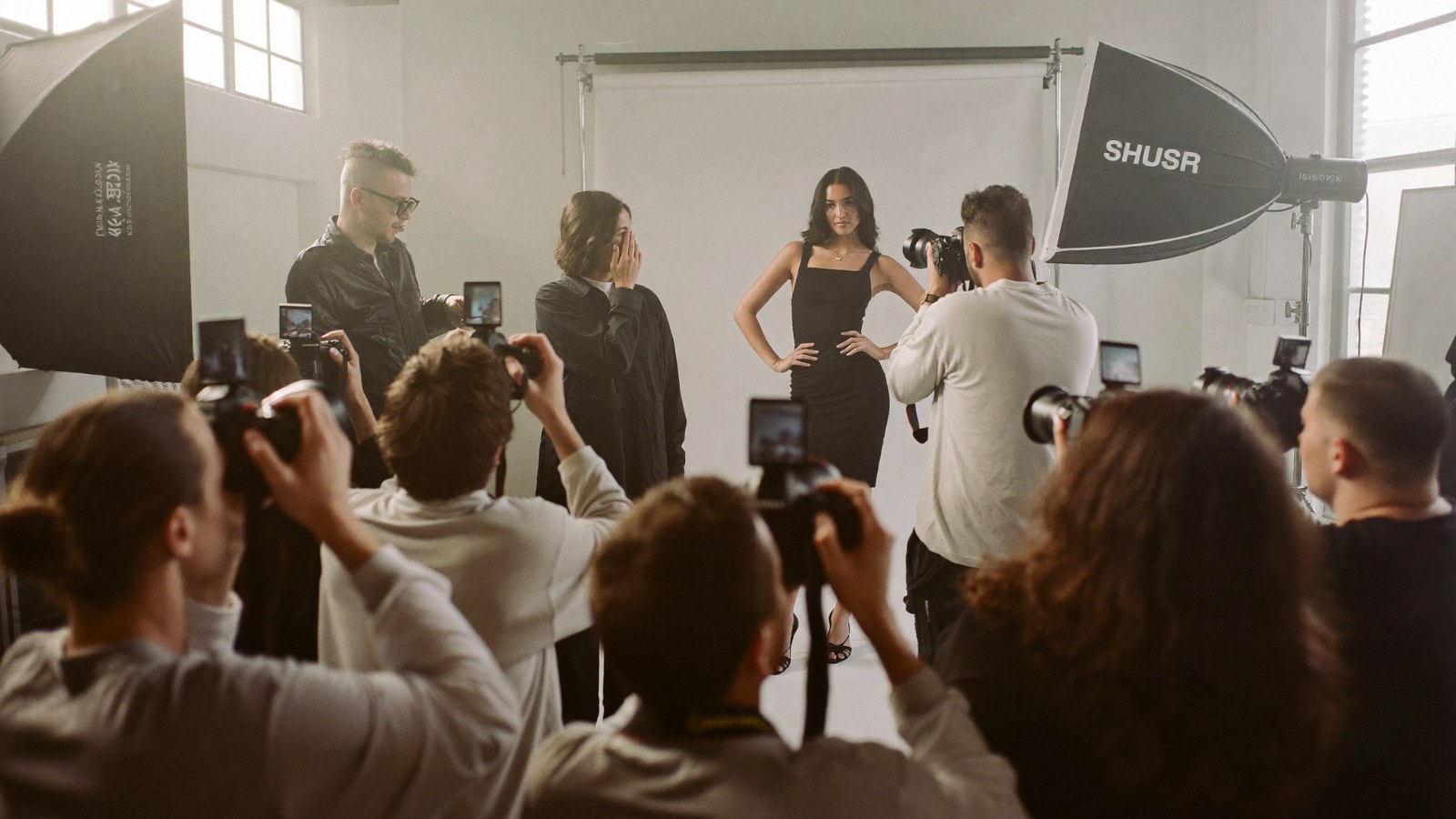
I’m seeing more large, organized TFP events built to resemble the paid group shoots and professional model events that have existed for years. Instead of one photographer and one model agreeing to create something specific, there may be multiple models, a room full of photographers, several looks, themed sets, scheduled rotations, social-media promotion, vendors, sponsors, and an organizer trying to hold the whole thing together. Some are genuinely organized productions. Others are open gatherings where everyone shows up with a camera or a wardrobe bag and figures it out after they arrive.
I’m not claiming the large TFP event was invented yesterday. It wasn’t. Street meets — where photographers and models gather for shots on any given weekend — have been a fixture in this world for years.
What I can say is that these events have become far more visible and normalized in the creative circles I watch. They’re appearing often enough that they can no longer be dismissed as the occasional meetup. They’re becoming part of the market.
And once something becomes part of the market, it affects the value of everything around it.
TFP Was an Agreement Before It Was an Event
The TFP I remember usually began with a purpose.
A photographer needed to test a lighting idea. A model needed a stronger beauty image. A stylist wanted to show a new look. Someone had access to a location, a wardrobe concept, or an idea that could benefit everyone involved.
The collaboration didn’t have to be commercially valuable, but it had to make sense. Each person brought something the other needed, and the images were supposed to move both portfolios forward.
It was also personal. The photographer and the model had to communicate. They agreed on the concept, the boundaries, the wardrobe, the delivery, and how the final work could be used. Even when the collaboration was informal, the exchange was still negotiated between two people.
The large TFP event changes that relationship.
The organizer becomes the center. The model may not know which photographers will attend. The photographer may not know which models will be available until shortly before the event. Concepts are designed for broad participation rather than for the specific needs of one model and one photographer.
That doesn’t automatically make the experience worse. It makes it a different product.
What used to be a private creative agreement is becoming a public format.
The Exchange Has Been Packaged
TFP can now be promoted like an event, scheduled like a workshop, and experienced like a social gathering.
There are dedicated groups organizing recurring collaborations. There are event pages inviting photographers and models of every experience level. There are paid photo meets where participants buy admission and still exchange their labor for images. There are emerging platforms built specifically to help people find TFP shoots, studios, collaborators, and events. And there are booking tools like ModelDesk (full disclosure: a 360ism product), where a registered model can create her own paid group shoot — one model, pre-built lighting, rotating time slots — or join one another model is running.
That tells me something important. TFP is no longer only an agreement between two people. It’s becoming infrastructure.
People are building communities, event calendars, websites, ticket products, and audiences around the exchange. Once that happens, TFP stops being only portfolio development and starts functioning as networking, entertainment, education, community, content production — and, in some cases, a business model.
There’s nothing automatically wrong with that. Organizing an event takes time. Locations cost money. Studios cost money. Sets, lighting, insurance, food, staff, promotion, and administration all cost money. Even a “free” event is being paid for by somebody.
The question isn’t whether an organizer should ever make money from a TFP event.
The question is whether the structure creates enough value for the people whose participation makes that event possible.
Why Is This Happening Now?
There are several possible explanations, and I don’t believe any one of them covers all of it.
Equipment is more accessible. Phones and entry-level cameras now produce results that would have been difficult for a beginner to achieve a decade ago. Social media gives almost everyone a reason to keep making new images. Models, photographers, makeup artists, stylists, influencers, and small businesses all need a steady supply of content.
Artificial intelligence may be shifting visual expectations, too. People are seeing an endless stream of polished, dramatic, sometimes impossible images. That can inspire creators, but it can also pressure them to produce more, experiment more, and keep pace with a standard that changes every week.
Economic pressure is likely another factor. More people are trying to turn hobbies, personal brands, and creative interests into additional income. Some enter modeling or photography because they see a possible business. Others simply want a community where they can practice without the pressure of going professional right away.
Then there’s the simplest explanation: people want somewhere to go.
They want to meet other creatives. They want to use their cameras. They want to get dressed, build a look, make something, post it, and feel like they’re part of something.
Any of these could be driving what I’m seeing. I can’t honestly say which one is, but I also can’t ignore how consistently the format keeps appearing.
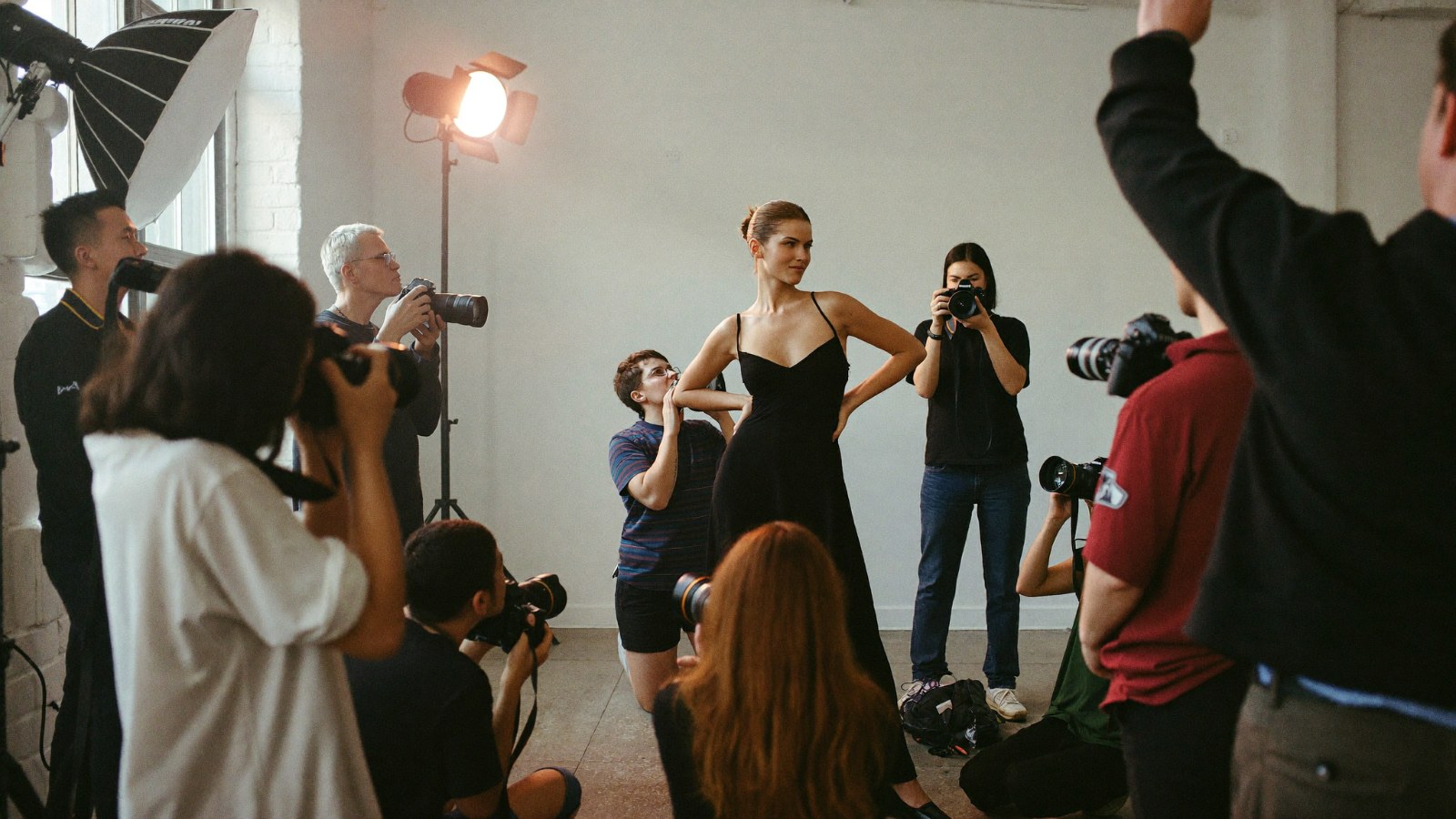
One model, a room full of cameras. The large TFP event turns a private agreement into a public format.
Not Everyone in the Room Wants the Same Thing
One mistake people make is treating every photographer at a large event as if they all share the same motivation.
I tend to see at least three groups.
The portfolio- and skill-building photographer needs repetition. They may be learning lighting, posing, communication, composition, or camera control. A large event gives them multiple faces, looks, and environments without requiring them to independently produce every shoot.
The social or hobby photographer enjoys photography but doesn’t necessarily intend to make it a business. The event is part creative exercise, part social experience. Meeting people and having somewhere enjoyable to shoot can matter as much as the final photographs.
The access-driven photographer will pay when the model, concept, genre, or degree of access feels distinctive enough. They may attend TFP events to scout new talent or pick up general portrait and fashion work, while continuing to book private or paid sessions for the specialized work they can’t create in a crowded public room.
All three can occupy the same space, and all three evaluate value differently. The skill-builder chooses volume over exclusivity. The hobbyist chooses community over production value. The access-driven photographer participates selectively and saves money for talent or concepts that feel genuinely rare.
This is why the TFP event doesn’t eliminate the paid market. It changes which parts of the paid market still feel necessary.
The Benefits Are Real
It would be easy to criticize large TFP events simply because they’re free or because they attract beginners. That would miss their legitimate value.
New photographers need a place to make mistakes. New models need time in front of the camera. People need opportunities to learn how to communicate, pose, direct, style, light, and collaborate. Not everyone can afford a private studio, a professional model, a makeup artist, and a fully produced concept every time they want to practice.
A well-run TFP event can give participants confidence, connections, usable images, and a clearer sense of what they need to improve. It can help a new model discover whether she actually enjoys modeling. It can help a photographer realize that owning a camera and directing a person are two completely different skills. It can also introduce people who go on to create paid work together.
The problem isn’t that these benefits exist. The problem starts when the event is presented as though showing up produces professional-level value on its own.
Being in a room with people who are posing doesn’t build a strong portfolio. Taking hundreds of frames doesn’t guarantee that any of them say anything. A crowded set can teach a photographer to react quickly, but it won’t teach them to develop a concept, direct a model, control an environment, or deliver a finished body of work.
Access creates an opportunity. It doesn’t replace intention.
So Are the Market Effects
When photographers can regularly access local models through free or inexpensive community events, some of them will naturally become less willing to pay for ordinary access elsewhere.
That doesn’t mean they’ll never pay. It means the reason for paying has to become clearer.
The same principle applies to organizers.
If photographers can attend a free gathering and come away with acceptable images, a paid event has to offer more than a different room full of people. It needs stronger talent, better concepts, controlled lighting, meaningful direction, dependable scheduling, clear boundaries, fair access, and a level of production the photographer couldn’t easily reproduce alone.
Paid work doesn’t disappear when free work becomes plentiful. But average paid work becomes much harder to defend.
What This Means for the Traveling Model
The traveling model faces a version of this problem that’s easy to miss.
Travel carries a cost structure that local talent doesn’t have. Airfare or gas, lodging, meals, and days away from other income all have to be recovered somewhere, and they get recovered in her rate. So the traveling model usually arrives priced above a comparable local model, not below her.
That premium used to be defensible on novelty alone. A new face in a market was worth something simply because nobody there had shot her yet.
Novelty is no longer scarce.
When photographers can access local models regularly through free or low-cost community events, the traveling model isn’t just competing against other traveling models. She’s competing against a standing supply of unpaid local access — and she’s asking for a higher rate than the local model she’s being compared to.
For a genuinely premium model, that math still works. A distinctive look, real posing range, presence, versatility, reliability, a following that brings its own attention, a reputation that makes photographers want the credit of having shot her, and the ability to transform a shot rather than pose through it — those justify both the rate and the travel.
But for a model who’s newer to posing, average in look, not widely known, and hasn’t generated any excitement around her name, the math gets hard. She’s carrying premium pricing without premium leverage, into a market that has cheaper alternatives sitting in a group chat.
This helps explain why many traveling models offer nude work.
The group format doesn’t lend itself to it — too many people, too little control, too much liability, too many phones. So a willingness to shoot nude, implied, or art nude puts a model in a category the free room can’t easily supply, no matter how many photographers are in it. That’s genuine leverage, and it’s the reason a traveling model with an ordinary portfolio can still fill a tour schedule while a comparable local model can’t get paid for clothed work.
But leverage isn’t the same as value.
Nude access gets the booking. It doesn’t make the model premium, it doesn’t build a rate she can raise, and it doesn’t protect her from the next model who offers the same access for less. She’s competing on a category rather than on herself, and category-based pricing has a ceiling and a floor that other people set.
The premium model isn’t the one who offers the most access. She’s the one the photographer would still book if the access were identical.
Free Events Still Have an Economy
The word “free” can hide how much value is changing hands.
The model contributes wardrobe, makeup, travel, preparation, posing, and the use of her likeness. The photographer contributes equipment, time, direction, editing, storage, delivery, and often the final images everyone else uses to promote themselves. A studio or location contributes space. An organizer contributes coordination, promotion, structure, and risk.
Someone may also be collecting admission, building an email list, growing a social-media group, attracting sponsors, selling future events, or strengthening a personal brand.
None of that’s automatically unethical. Building an audience and creating a sustainable event are legitimate goals.
But everyone should understand the exchange.
If a photographer is expected to create the visual product, deliver images, promote the participants, and pay admission, then that photographer isn’t simply a collaborator. He’s a customer and a production resource at the same time.
If a model receives dozens of images but no direction, no meaningful portfolio improvement, and no control over where those images appear, then exposure isn’t the value it was presented to be.
When an event gets larger, clarity becomes more important — not less.
The Difference Between Access and Value
The photography and modeling world has always sold access in one form or another: access to talent, equipment, locations, knowledge, sets, networks, audiences, or opportunities.
Large TFP events make basic access easier. That can be a good thing. It lowers the barrier for people who might never otherwise walk into the room.
But lowering the barrier forces professionals to answer a harder question: what are we providing beyond access?
For models, the answer may be a look, a personality, a genre, a level of performance, or a professional reliability that can’t be substituted by whoever happens to be available locally.
For photographers, it may be direction, visual authorship, consistency, client experience, production ability, and finished work that goes well beyond pressing the shutter.
For organizers, the answer has to be structure and safety — an environment where expectations are clear, boundaries are respected, time is managed, and everyone understands what they’re receiving in exchange for what they’re contributing.
That’s the standard I think the growth of TFP events will ultimately force everyone to confront.
It’s no longer enough to say, “There will be models there.”
It’s no longer enough to say, “You will get pictures.”
The real question is whether those models, those pictures, and that experience move anyone forward.
TFP Hasn’t Become Bad. It’s Become Bigger.
I don’t see TFP as the enemy of professional photography, and I don’t think community events need to be stopped. Most people entering these spaces are doing exactly what creative people should do: testing, learning, meeting one another, and finding ways to create with the resources they have.
But the format has changed enough that we need to talk honestly about what it’s become.
TFP began as a direct exchange of time, talent, and images. It now exists alongside event tickets, large communities, recurring meetups, content days, workshops, studio rentals, sponsors, and professional bookings — and the line between collaboration, education, entertainment, and business has never been entirely clear.
That’s where both opportunity and exploitation grow.
The question is no longer whether TFP is good or bad. The better questions are: Who’s the event really for? Who’s receiving value? Who’s doing the labor? Who’s building the audience? Who has a path to earning money? And does everyone in the room understand what they’re exchanging?